Author: Marcus Vance
Network Engineer & Senior Infrastructure Analyst (10+ years experience in IPTV/OTT architecture) | Ultimate IPTV Hub Editorial Team
Disclaimer: This article is for educational purposes. Ultimate IPTV Hub strictly advocates for legal streaming. Understanding the infrastructure differences between legitimate, licensed IPTV operators and illegal pirate services is crucial for consumers and enterprise professionals.
Table of Contents
Quick Summary: IPTV Headend Overview
(Optimized for Google Featured Snippets)
| Feature | Details |
|---|---|
| Primary Purpose | To acquire, decode, compress, and distribute live TV signals over an IP network. |
| Core Process | Signal Acquisition → Demodulation → Encoding/Transcoding → Multiplexing → CDN Distribution |
| Main Hardware | Satellite Matrices, IRDs, Hardware Encoders, Multiplexers (MUX). |
| Stream Output | HLS (Apple standard), MPEG-DASH. |
| Scale | Capable of supporting millions of concurrent users globally without buffering. |
Introduction: The Heartbeat of Buffer-Free Streaming in 2026
When you sit down to watch a highly anticipated live sporting event, you expect flawless 4K resolution, crystal-clear audio, and absolutely zero buffering. However, the reality of internet television is that maintaining a perfectly stable stream for tens of thousands of concurrent viewers is a monumental technical challenge. The secret weapon that separates top-tier premium streaming providers (like those rigorously tested on our Best IPTV Services USA list) from unreliable platforms is a massive piece of enterprise-grade infrastructure known as the IPTV headend.
For the everyday consumer, understanding how an IPTV headend operates is the absolute key to identifying high-quality services and avoiding online scams. For entrepreneurs and network engineers, mastering the architecture of an IPTV headend is completely non-negotiable. It is the absolute foundation of any legitimate streaming business, heavily regulated by industry standards such as those set by the Digital Video Broadcasting (DVB) consortium.
In this comprehensive, deep-dive guide for 2026, we will explore every single facet of an IPTV headend in microscopic detail. We will break down the physical hardware, the intricate software layers, the complex signal acquisition process, advanced video encoding protocols, the rise of cloud-based alternatives, and the massive financial investments required to build one from scratch.
1. What Exactly is an IPTV Headend?
At its core, an IPTV headend (Internet Protocol Television Headend) is the central, highly secured master facility where television signals are initially received, processed, encrypted, and finally distributed over an IP network. You can think of the IPTV headend as the central nervous system or the “brain” of any commercial streaming platform. If you are still learning the basics of what is IPTV and how does IPTV work, knowing about this mission-critical control center is essential.
In the early days of traditional broadcasting, a headend consisted of massive fields of satellite dishes that received RF signals and pushed them through coaxial cables. Today, the modern IPTV headend captures those same satellite feeds, digitizes them, compresses the incredibly massive raw video files into web-friendly digital formats, and routes them securely directly to your smart TV.
It is important to note that without a content processing infrastructure, there is no professional IPTV distribution. Many online IPTV sellers operate merely as resellers rather than owning infrastructure. These resellers rely entirely on someone else’s backend, which introduces latency and a significantly higher risk of buffering. This is precisely why we strongly advise readers to choose providers from our vetted Best IPTV Services USA rankings, as these companies actually invest in their own hardware.
2. The Deep Architecture: How a Modern IPTV Headend Works
To successfully deliver thousands of live channels globally, a commercial IPTV headend must operate with military-grade precision. The internal architecture of this facility can be broken down into five distinct phases.
Phase 1: Signal Acquisition (Receiving the Feed)
Professional IPTV headend facilities use several advanced methods to acquire live television feeds from around the globe:
- Satellite Downlink Arrays: Massive parabolic antennas receive encrypted or Free-to-Air (FTA) broadcasts directly from satellites in orbit.
- Direct Fiber-Optic Feeds: Premium networks often provide direct, uncompressed video feeds to the IPTV headend via dedicated, private fiber-optic cables.
- Over-The-Air (OTA) Terrestrial: Local broadcast channels are captured locally using heavy-duty terrestrial antennas.
Phase 2: Demodulation and Initial Decryption
Once the signal is physically acquired, the IPTV headend utilizes specialized rack-mounted devices called Integrated Receiver Decoders (IRDs). The IRD receives the raw RF signal, demodulates it into a workable digital bitstream (compliant with DVB-S2 standards), and uses Conditional Access Modules (CAM cards) to decrypt the channels.
Phase 3: Video Encoding and Transcoding (The Core Engine)
This phase is the true heavy lifter of the operation, and it is arguably the most critical phase to stop freezing and lag during end-user playback. The IPTV headend passes massive video data through dedicated hardware encoders equipped with powerful ASICs or high-end GPUs.
These machines mathematically compress the video using advanced codecs like H.264 (AVC), H.265 (HEVC), or the emerging AV1 codec. A premium IPTV headend will create multiple resolution profiles to enable Adaptive Bitrate Streaming (ABR), ensuring that if a user’s home Wi-Fi speed suddenly drops, the stream seamlessly downgrades to 720p instead of freezing.
Phase 4: Advanced Multiplexing (MUX)
After the raw video and audio feeds are compressed, a Multiplexer (MUX) inside the IPTV headend combines the compressed video track, multiple alternative audio tracks, and complex subtitle data into a single, cohesive transport stream. Proper PTS/DTS timestamp injection is critical here to prevent audio desync.
Phase 5: Network Distribution and CDN Integration
The final IP packets are pushed from the primary IPTV headend to a massive Content Delivery Network (CDN). (For a deeper architectural dive, read our complete guide on IPTV CDNs Explained). When a user in Los Angeles clicks on a live channel, the CDN intelligently routes the video from a local Edge Server located in California, rather than forcing the user’s app to pull the stream from the main IPTV headend located across the world.
3. Hardware Masterclass: Inside the Server Room
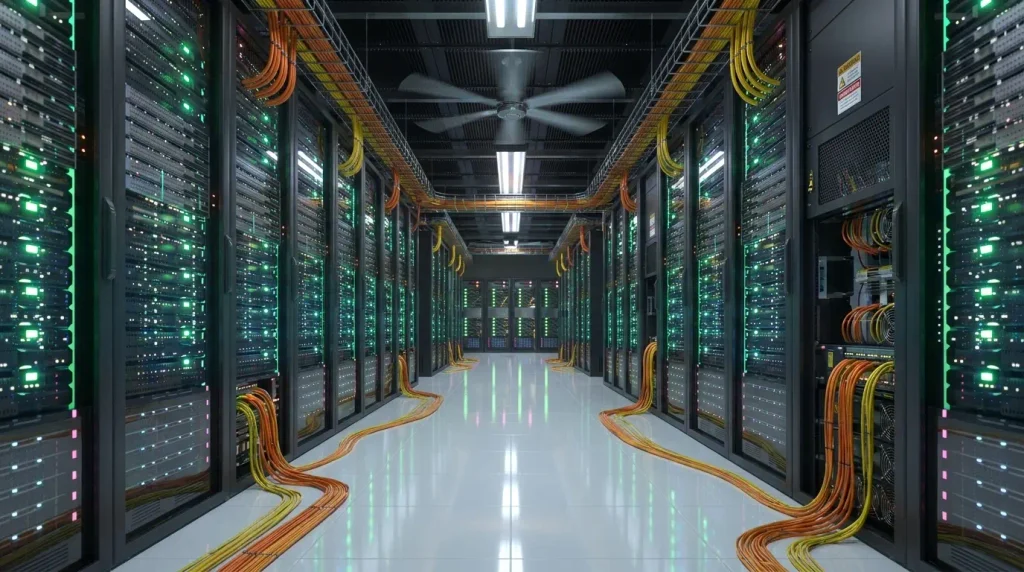
| Hardware Component | Technical Function in the IPTV Headend |
|---|---|
| Satellite Matrices | Routes the high-frequency waves from the roof antennas to the specific receivers inside the building. |
| Professional IRDs | Takes the raw RF input and decrypts the ASI or IP output reliably 24/7/365. |
| Hardware Encoders | Performs the mathematically complex H.264/H.265 video compression in real-time. |
| Middleware Servers | Runs the backend software managing users, EPG, and billing API calls. |
| Edge Servers | The final high-throughput server that pushes the HLS or MPEG-DASH feed to the open internet. |
4. Physical IPTV Headend vs. Virtual (Cloud) Headend
In recent years, the streaming industry has seen a massive paradigm shift from traditional physical hardware to cloud computing infrastructure.
The Traditional Physical Hardware IPTV Headend
- Pros: Absolute, granular control over the signal quality. Unmatched physical and digital security. Over the long term (5+ years), OpEx (Operating Expenses) can be lower.
- Cons: Exorbitant startup costs (CapEx). Extremely high commercial electricity bills. Requires a dedicated team of on-site network engineers available 24/7.
The Virtual Cloud IPTV Headend
A virtual IPTV headend completely bypasses physical servers by using massive cloud platforms (like AWS Elemental). The provider only acquires the IP feeds locally and sends them securely to the cloud.
- Pros: Extremely elastic and scalable. You can deploy a virtual IPTV headend and add 500 new channels in a matter of minutes.
- Cons: Heavy recurring monthly fees for cloud processing and egress bandwidth.
5. The True Financial Cost of Building an IPTV Headend
To build a modest, professional-grade physical IPTV headend capable of ingesting, transcoding, and distributing 1,000 live HD and 4K channels, the financial breakdown looks roughly like this in 2026:
- Receiving Equipment (Commercial Dishes, High-end IRDs): $50,000 – $80,000
- Enterprise Hardware Encoders: $150,000 – $250,000
- Core Networking Gear: $40,000 – $70,000
- Middleware Servers and DRM Software Licensing: $20,000 – $50,000 annually
- Redundancy (UPS Battery Backups, Diesel Generators): $30,000 – $60,000
Launching a top-tier physical IPTV headend easily requires an initial capital expenditure ranging from $300,000 to over $500,000 USD. This massive financial barrier to entry highlights why it is so critical to choose established providers from our Best IPTV Services USA list, as they possess the capital to maintain this infrastructure.
6. How to Identify a Quality IPTV Provider (Checklist)
Illegal pirate services or cheap operators often use a technique called “restreaming”—stealing an already compressed stream and re-encoding it. This destroys picture quality and adds massive latency. Before subscribing to any service, use this checklist to ensure they operate on top-tier infrastructure:
- Direct Stream Sourcing: Do they offer true 60 FPS sports? Restreamers usually drop to 30 FPS.
- Adaptive Bitrate (ABR): Does the app allow you to manually switch from 4K down to 1080p or 720p? If yes, they have a proper transcoding IPTV headend.
- EPG Accuracy: A legitimate provider invests in accurate XML data synchronized perfectly with their middleware.
If you are tired of constant buffering, we strongly suggest reviewing our carefully vetted list: 8 Best IPTV Services in USA for Legal Streaming. Every single provider featured on our recommendation page has been rigorously tested for backend IPTV headend stability.
7. Comprehensive FAQ: Expert Answers on Streaming Architecture
What is the strict difference between Middleware and an IPTV Headend?
The IPTV headend is strictly responsible for the heavy physical lifting of the video itself—acquiring, decoding, transcoding, and compressing the live TV signal. Middleware is the administrative software layer that manages the customer experience. (To understand the UI and billing software, read our guide on IPTV Middleware Explained). The middleware securely handles user authentication, serves the EPG, and tells your device which specific video stream to request from the IPTV headend.
Can a poorly configured IPTV headend cause audio desync?
Absolutely, yes. Audio desync is almost exclusively an IPTV headend multiplexing failure. If the hardware encoders are overloaded, the video processing phase takes slightly longer than the audio processing phase. Premium IPTV headend facilities use strict timestamp synchronization to ensure this frustrating issue never reaches the end-user.
How exactly does DRM (Digital Rights Management) work inside an IPTV headend?
For strictly legal streaming services operating with broadcaster consent, robust DRM is legally required. (For more details on legality, see our guide: Is IPTV Legal in USA?). Just before the video packets are sent to the open internet, the stream passes through a specialized DRM packager. Only an authorized user’s secure application can request the decryption key to play the video.
What modern streaming protocols are used by a commercial IPTV headend?
According to official engineering documentation, a modern commercial IPTV headend almost exclusively outputs video using fragmented, HTTP-based protocols. The two dominant industry standards are HLS (HTTP Live Streaming), originally pioneered by Apple, and MPEG-DASH. Both of these advanced protocols slice the continuous live video feed into tiny 2-to-10 second chunks for easy delivery. (Curious about the technical differences? See our HLS vs MPEG-DASH Comparison).
8. The Future of IPTV Headends: AI and Cloud Integration in 2026
As we navigate through 2026, the architecture of the traditional IPTV headend is undergoing its most radical transformation yet. The integration of Artificial Intelligence (AI) and Machine Learning (ML) into video encoding pipelines is revolutionizing how data is compressed. Modern AI-driven hardware encoders can now analyze video frames in real-time, dynamically allocating bandwidth only to complex, fast-moving scenes (like a soccer ball flying across the screen) while compressing static background pixels even further. This drastically reduces overall CDN egress costs without sacrificing perceived visual quality.
Furthermore, the convergence of 5G networks and edge computing means that micro-headends are moving closer to the end-user, reducing latency to single-digit milliseconds. For service providers looking to scale rapidly without buying millions of dollars in physical server racks, migrating to a hybrid cloud architecture is no longer just an experiment—it is the industry standard. (If you are exploring how modern apps process these streams on your TV devices, make sure to read our comprehensive guide on Best IPTV Players 2026 to see how modern applications handle these advanced backend feeds).
9. Final Conclusion
The IPTV headend is the invisible, highly mechanical powerhouse that makes modern digital television and global live streaming a reality. It flawlessly bridges the technological gap between raw, massive broadcast data and the sleek, heavily compressed digital streams delivered effortlessly to your living room.
By understanding this complex backend, you are now equipped to navigate the streaming industry safely. When it comes time to renew your current provider, prioritize services that invest heavily in their own dedicated IPTV headend technology. To get started, verify your choices against our most recent Best IPTV Services USA evaluations to ensure a premium, buffer-free experience for years to come.